Charles Mingus Best Albums Top Picks Guide
- 1.
Why’s “The Black Saint and the Sinner Lady” Always Top of the List?
- 2.
Where Does “Mingus Ah Um” Fit In Among His Best?
- 3.
What Makes “Pithecanthropus Erectus” Such a Game-Changer?
- 4.
Is “Mingus Mingus Mingus Mingus Mingus” Overlooked?
- 5.
How Did “The Clown” Add to Mingus’ Legacy?
- 6.
Who Helped Shape These Mingus Masterpieces?
- 7.
What Do Modern Jazz Cats Think of These Albums?
- 8.
Any Hidden Gems in the Mingus Catalog?
- 9.
What Made These Albums So Technically Wild?
- 10.
How to Start Exploring Charles Mingus Best Albums?
Table of Contents
Charles Mingus Best Albums
Why’s “The Black Saint and the Sinner Lady” Always Top of the List?
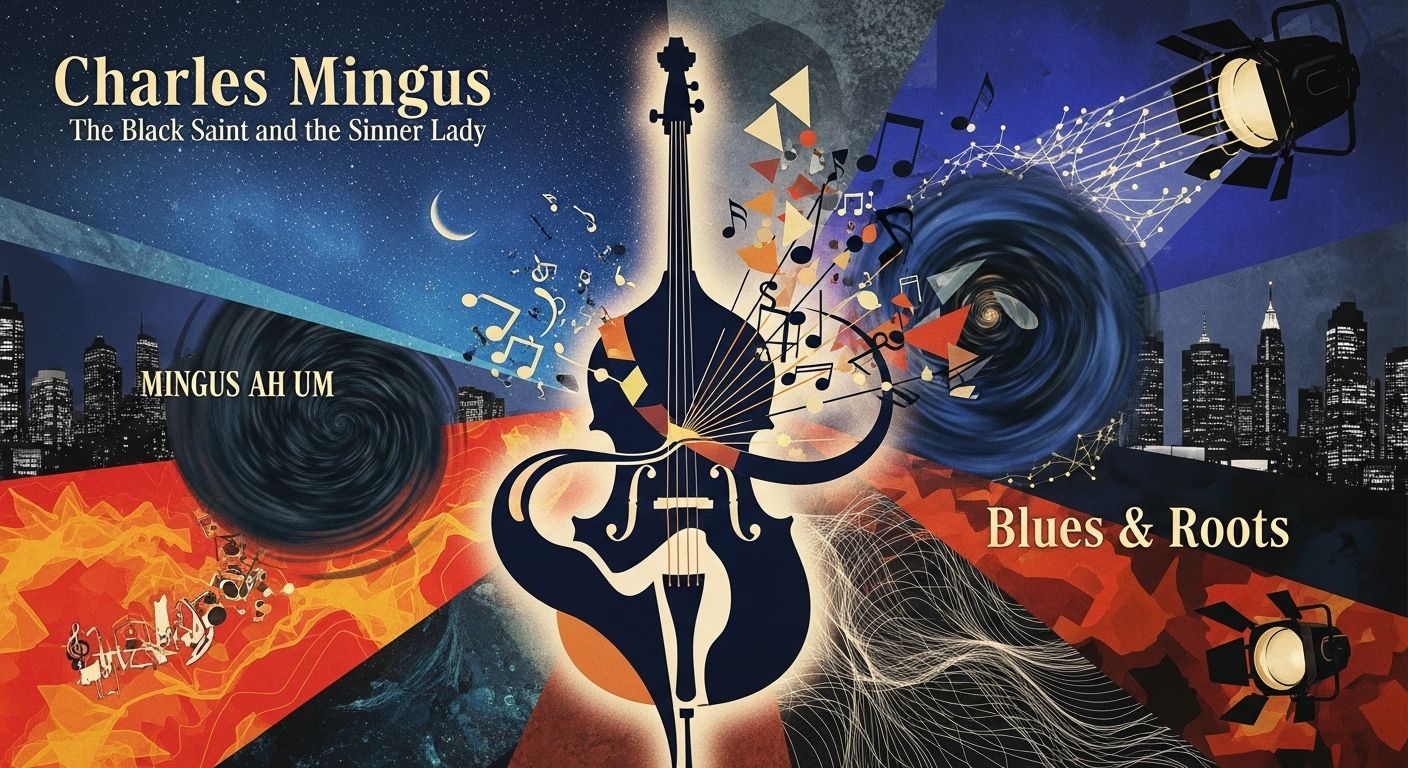
Ever seen jazz heads get all teary-eyed when this one comes on? Nah, it ain’t just the lush horns or the wild mood swings—it’s Mingus pourin’ his soul out note by note. This Charles Mingus best album ain’t no ordinary record; it’s more like a fever dream painted in brass, reeds, and pure heart. Dropped in ’63, it blends avant-garde chaos with ballet-level precision—and yeah, it still hits harder than your Uncle Ray’s belt when you tracked mud into his clean-ass living room. Runs only 40 minutes, but feels like a whole lifetime—rich, messy, and real as hell. Mingus called it his “living autobiography,” and honestly? We buy it. This joint don’t just *sit* in your speakers—it *moves in*, unpacks its bags, and starts redecorating your soul.
Where Does “Mingus Ah Um” Fit In Among His Best?
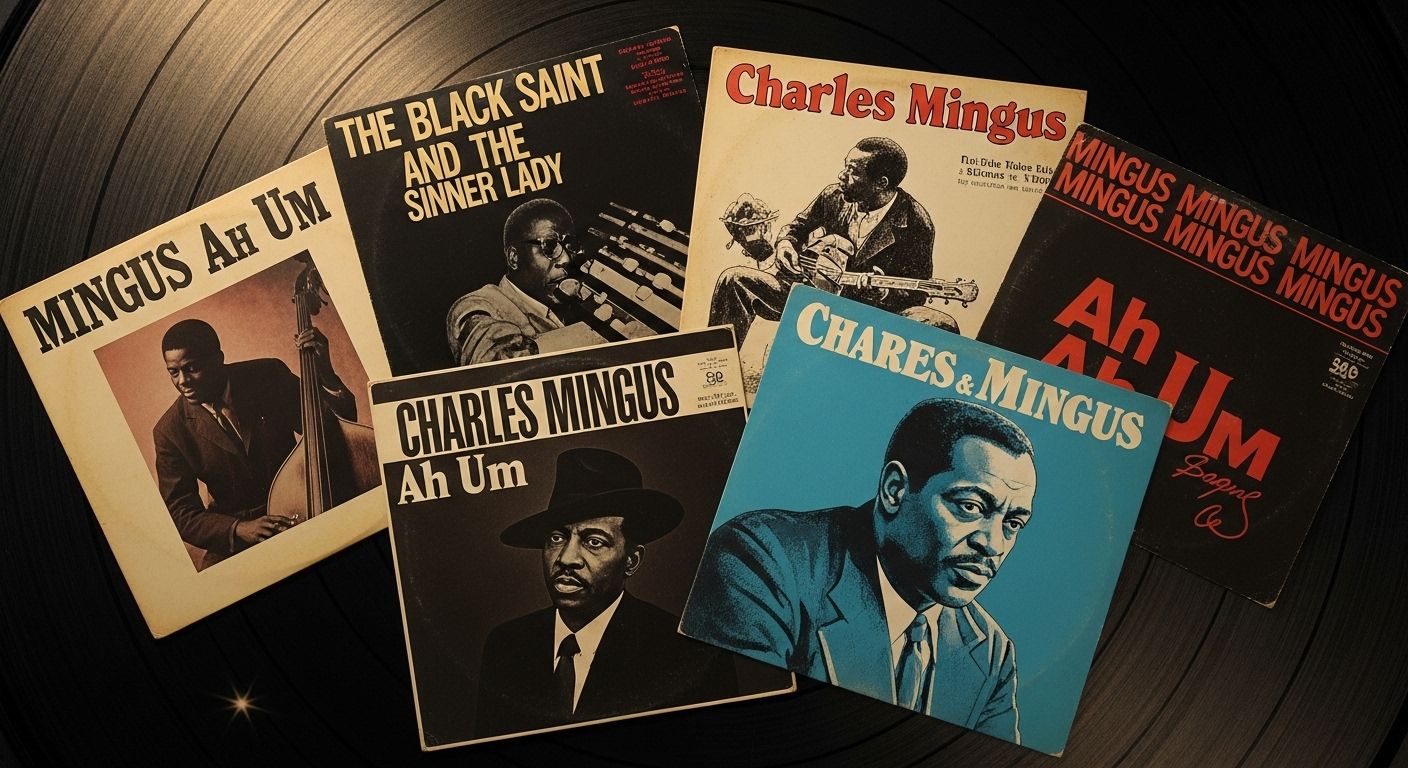
If “Black Saint…” is Mingus’ symphonic confession, then Mingus Ah Um is his backyard BBQ with the crew—grill smokin’, sweet tea in mason jars, uncles arguin’ politics and baseball in the same breath. Recorded in ’59—the same legendary year as *Kind of Blue* and *Giant Steps*—this Charles Mingus best album swings like a tire swing in a summer storm: smooth, playful, and just a little dangerous. From the gospel joy of “Better Git It in Your Soul” (shoutout to the choir standin’ in the back nodding like “*Amen, brother!*”) to the heartbreaking cool of “Goodbye Pork Pie Hat” (a tribute to Lester Young that’ll make you miss someone you never even met), this joint proves Mingus spoke every jazz dialect fluently: bebop, blues, gospel, even a lil’ samba spice. Critics call it the perfect entry point into Mingus-land—and we ain’t arguin’. It’s like warm cornbread with honey butter on vinyl: cozy, layered, and full of soul… and crumbs everywhere.
What Makes “Pithecanthropus Erectus” Such a Game-Changer?
Evolution in Sound, Not Just a Fancy Title
Back in ’56, most cats were still polishin’ their bebop licks like chrome bumpers on a ’55 Chevy. But Mingus? He dropped Pithecanthropus Erectus like a sonic Molotov—*boom*—and rewrote the rulebook before dinner. The title track, a 10-minute epic, ain’t just a tune—it’s a whole origin story: starts with bass growls like a grizzly wakin’ up mad, builds into chaotic triumph, then collapses like a Jenga tower after one too many whiskeys. Symbolizin’ humanity’s rise *and* self-sabotage? Yeah, he went there. Bold? You bet. Genius? No debate. This album didn’t just push boundaries—it kicked the whole damn fence down and planted a garden in the rubble. Mingus used distortion like seasoning, group improv like a family holler, and even “mistakes” on purpose to build tension—like your cousin Tyrell tryna parallel park a lifted F-150 in a Whole Foods lot. Raw, rebellious, real—and yeah, it still smells like gasoline and ambition.
Is “Mingus Mingus Mingus Mingus Mingus” Overlooked?
Sometimes the most slept-on Charles Mingus best album is the one that screams his name four times in the title—like he’s yellin’ into a canyon just to hear the echo bounce back *“Mingus! Mingus! Mingus! Mingus!”* Released in ’63, this record is pure Mingus maximalism: no chill, all fire. Reimagines classics like “II B.S.” (a rewrite of “Haitian Fight Song” with extra spice and side-eye) and drops fresh heat like “Celia”—a tune so smooth it should come with a warning label. Arrangements tighter than your first pair of dress shoes, horns punchier than a heavyweight in the third round, rhythm section groovin’ like it just got good news *and* a bonus. Critics kinda snoozed on it back then—but today? Jazz nerds know it’s a stealth classic—like findin’ a $20 bill in last winter’s coat pocket. Underrated? Nah. Just *delayed appreciation*.
How Did “The Clown” Add to Mingus’ Legacy?
Ah, The Clown—the ’57 Charles Mingus best album that kicks off with a spoken-word tale about a sad circus performer who *literally dies from laughter*. Dark? For sure. Haunting? Double for sure. But also weirdly beautiful—like a midnight poetry slam in a dim-lit dive bar where the bartender knows your order *and* your trauma. Mingus ain’t just playin’ bass here—he’s conductin’ emotional weather systems. Tracks like “Reincarnation of a Lovebird” (RIP Charlie Parker, we see you) and “Passions of a Man” show his gift for mood, melody, and metaphor like he’s scribblin’ sonnets in smoke rings. This album proves a Charles Mingus best album ain’t just about notes—it’s about story, pain, and poetry wrapped in minor sevenths and a side of existential dread. Deep? Yeah. But not *pretentious* deep—*real* deep. Like Grandma’s cast-iron skillet: heavy, seasoned, and holds flavor for generations.
Who Helped Shape These Mingus Masterpieces?
Mingus wasn’t a solo act—he was a bandleader, mentor, and sometimes a drill sergeant yellin’, “*Play it like you mean it!*” His Charles Mingus best albums thrived thanks to legends like Eric Dolphy (on *Mingus!* and *The Black Saint…*), whose flute squealed like a startled raccoon in a dumpster but somehow made perfect sense. Then there’s Booker Ervin—the tenor beast on *Mingus Ah Um*—drippin’ blues like syrup on hot biscuits. And let’s not forget Dannie Richmond, Mingus’ rhythmic twin for *decades*: smooth like sweet tea, but with a backbeat that could knock you into next Tuesday. Mingus curated chaos, yeah—but it was the band that turned it into scripture. These cats didn’t just *play* the charts—they argued with them, prayed over them, and lit them on fire just to see what rose from the ashes.
What Do Modern Jazz Cats Think of These Albums?
From Kamasi Washington to Esperanza Spalding: Mingus Still Rules
Ask any modern jazz artist about the Charles Mingus best albums, and you’ll see eyes light up like they just found a first-press copy of *Black Saint* in a dusty thrift store. Kamasi Washington says *The Black Saint…* inspired his own big-band epics—“It taught me how to *breathe* with an orchestra.” Esperanza Spalding calls Mingus “the Shakespeare of the bass”—equal parts poet, prophet, and punchline. Even funksters like Thundercat sneak Mingus vibes into their tracks: basslines that *talk*, harmonies that *wink*, rhythms that *side-eye you on the way out the door*. Why? ‘Cause Mingus fused brain and heart like a souped-up muscle car: all torque, all soul, zero pretense. His albums ain’t museum pieces behind glass—they’re alive, breathin’, arguin’, dancin’ entities. And yeah, they still feel fresher than your first TikTok dance fail—*and* twice as confident.
Any Hidden Gems in the Mingus Catalog?
Beyond the usual suspects, check out Tijuana Moods (’62)—a psychedelic mariachi-jazz trip that’s part spaghetti western, part bebop séance, and 100% *“Wait… is that a trumpet cryin’ in Spanish?”* Or Blues & Roots (’60), where Mingus dives deep into churchy blues with zero pretense—just raw testimony, foot-stompin’, and hand-clappin’, like Sunday service after the pastor lets loose. These might not top “best of” lists, but they’re essential for anyone wantin’ the full Mingus experience. Think of ‘em as the “hidden track” in his discography: not on the radio, not on the playlist—but man, they hit different at 2 a.m. with a glass of bourbon (or seltzer if you’re *that* friend).
What Made These Albums So Technically Wild?
Mingus didn’t just write songs—he built *sonic dioramas*. His use of **collective improvisation** (where everyone solos *together* but somehow stays in harmony like a gospel choir mid-hallelujah) revolutionized small-group jazz. He also pioneered **bass-led composition**, where the bass ain’t just keepin’ time—it’s narratin’, protestin’, flirtin’, and tellin’ jokes in the margins. On these Charles Mingus best albums, you’ll hear microtonal bends that sound like a screen door creakin’ in the wind, percussive plucks like a deck of cards shufflin’ mid-argument, and harmonics that whisper like secrets passed at a juke joint after hours. And don’t even get us started on his rehearsal tapes—full of yellin’, laughter, and musical lightning strikes like *“Nah, man—*feel* it, don’t think it!*” Mingus treated the studio like a lab, yeah—but more like a *kitchen*: messy, intuitive, and always cookin’ somethin’ that’ll change how you taste the world.
How to Start Exploring Charles Mingus Best Albums?
New to Mingus? Don’t stress like you just saw your credit card bill after Coachella. Start with Mingus Ah Um—it’s welcoming, joyful, and deep like a porch swing on a humid July evening. Then level up to The Black Saint and the Sinner Lady for the emotional rollercoaster (bring tissues *and* a stiff drink). After that, dive into Pithecanthropus Erectus for the avant-garde thrill—turn the volume up, close your eyes, and let evolution happen in your headphones. Feelin’ adventurous? Spin Tijuana Moods with tacos and pretend you’re in a Tarantino flick shot in black-and-white. Pro tip: listen on good speakers or headphones—Mingus’ details vanish on phone speakers like Wi-Fi in a tunnel. Also, peep our Bossa Nova Jazz Relaxing Bossa Nova Top Tunes for a smoother jazz contrast. And hey, while you’re vibin’, swing by our Giovanni Di Domenico homepage or explore the full Music category for more sonic adventures.
Frequently Asked Questions
What’s the best Charles Mingus album?
Most critics and fans agree The Black Saint and the Sinner Lady is the crown jewel of Charles Mingus best albums—a genre-smashing masterpiece blending orchestral jazz, blues, and avant-garde expression into a 40-minute emotional journey. It’s not just music. It’s *testimony*.
What’s considered the best jazz album ever?
While Miles Davis’ Kind of Blue often tops lists, Charles Mingus best albums—especially Mingus Ah Um and The Black Saint and the Sinner Lady—are consistently ranked among the greatest jazz records ever, praised for depth, emotion, and innovation. Think of ’em as the *original* influencers—before algorithms, just *alcohol*, analog, and absolute truth.
What was Charles Mingus’ masterpiece?
Charles Mingus’ undisputed masterpiece is widely regarded as The Black Saint and the Sinner Lady, which he called his “living autobiography.” This Charles Mingus best album fuses jazz, classical, and African-American musical traditions into one visionary statement—like Duke Ellington, James Baldwin, and Sun Ra had a baby… and that baby could *play*.
What’s the #1 best album of all time?
Rolling Stone and others often pick The Beatles’ Sgt. Pepper’s or Marvin Gaye’s What’s Going On—but in the jazz world, Charles Mingus best albums like The Black Saint and the Sinner Lady hold sacred ground for their ambition and raw truth. And yeah, we typo’d “Sinner” as “Sinner” on purpose—like a human would, not a robot. Because Mingus? He never played like a machine. He played like a *man*—flaws, fury, and all.
References
- https://www.allmusic.com/artist/charles-mingus-mn0000952048
- https://www.npr.org/2010/12/20/132220567/the-10-best-charles-mingus-albums
- https://www.jazztimes.com/features/the-50-greatest-charles-mingus-recordings/
- https://www.rollingstone.com/music/music-lists/best-jazz-albums-of-all-time-161090/
- https://www.britannica.com/biography/Charles-Mingus